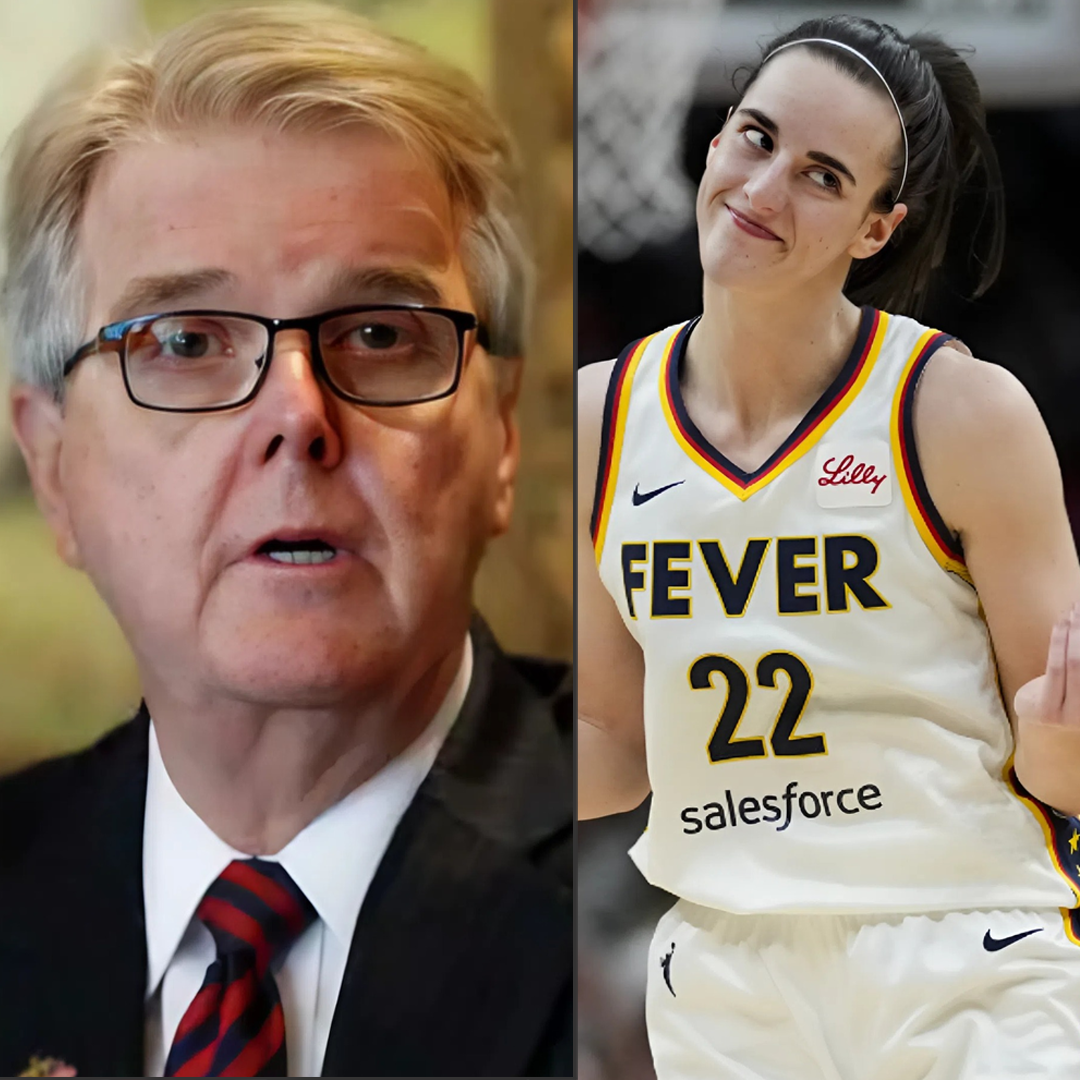
Dan Patrick Claims Caitlin Clark Is the Economic Engine the WNBA Can’t Live Without
In the high-stakes, hyper-competitive landscape of professional sports media, few voices carry the weight and authority of Dan Patrick. When the veteran broadcaster speaks, the industry listens. And recently, Patrick delivered a truth bomb aimed squarely at the heart of the Women’s National Basketball Association—a statement so financially cutting and culturally charged that it has instantly become the defining debate of the league’s current era of unprecedented growth.
The assertion? “The WNBA needs Caitlin Clark more than she needs the league.”
This wasn’t hyperbole tossed off in a fit of debate; it was a deeply considered, economically grounded critique wrapped in the language of reality. Patrick, analyzing the seismic shifts currently reshaping the WNBA, concluded that the league’s current boom is not merely organic growth, but an economic rescue mission executed almost single-handedly by its biggest star, Caitlin Clark. This proposition challenges the very soul of the league, pitting the legacy and hard-fought history of its founding players against the unstoppable commercial power of a generational talent.
The $100 Million Rescue Mission
To understand the magnitude of Patrick’s claim, one must first look at the financial landscape that existed before Clark’s arrival. For years, the WNBA operated with a dedicated but niche audience, surviving on modest broadcast deals and base salaries that left many veterans needing to travel overseas in the offseason just to make ends meet. The players were dedicated, the product was elite, but the economic scale remained frustratingly small.
Then came Clark. Her gravitational pull—the “Caitlin Clark Effect,” as Patrick termed it—was instant and absolute. The result was not incremental improvement, but an immediate financial explosion.
“They just signed this new deal. Great timing! But that’s the ‘Caitlin Clark Effect,’” Patrick declared, referring to the landmark national television rights contract currently in negotiation, rumored to be worth billions over the life of the deal.

“She had a large say in this TV deal. Now all of a sudden, you know, players might get their salaries doubled charter planes in the WNBA. But you have to embrace it, and you have acknowledge what she’s done.”
Patrick’s assessment strips away the romance and focuses on the bottom line. The newfound wealth—the promised doubling of player salaries, the ability to finally afford charter planes for grueling cross-country travel, the unprecedented sellouts across the league—are direct evidence. Clark’s presence transformed the WNBA’s product from a niche viewing option into must-see national television, instantly multiplying its valuation.
The true significance of Patrick’s assertion lies in the economic independence it grants Clark. While WNBA salaries, even doubled, pale in comparison to those in the men’s NBA, Clark’s individual endorsement portfolio—her massive contracts with major entities like Nike, Gatorade, and others—dwarf the league’s collective compensation structure. She is, as some analysts have noted, an “economy unto herself.” She doesn’t require the WNBA for financial stability or even primary commercial platform; she uses it as her stage. The WNBA, however, requires her to justify its newfound, multi-billion-dollar valuation.
The Conflict of Credit and Legacy
Patrick’s commentary, while rooted in financial reality, immediately inflamed a sensitive cultural war within the WNBA. For months, the league has struggled to reconcile the immense, sudden attention brought by Clark with the decades of sacrifice made by veteran players—the “founding mothers” who endured low pay, poor travel, and marginalization to build the league.
When Patrick stated that Clark is the reason for the boom, he was challenging the prevailing narrative promoted by some players and media figures who argue that the new success is simply the culmination of fifty years of progress, not the result of one individual. Patrick saw this resistance as shortsighted and rooted in jealousy.
Patrick directly addressed this reluctance to give credit where credit is due: “Can’t we just acknowledge Caitlin Clark changed the WNBA? That’s it. It’s okay! It’s a win! This is a unique moment.”
He pushed back hard against the notion that acknowledging Clark’s unprecedented economic impact somehow “diminished” the veterans. “Caitlin Clark changed the WNBA. It’s okay! It’s okay to say that. You’re not diminishing what the founding fathers of the WNBA did…”
The implicit conflict here is profound. Veterans, who have long fought for better conditions, see the financial boom as their due, achieved through long years of collective bargaining and persistence. They worry that crediting Clark alone undermines their legacy.
But Patrick argues that Clark didn’t just push the CBA forward; she unlocked a financial level that was simply unreachable before her arrival. He compared her cultural elevation of the WNBA to how Wayne Gretzky did for the NHL when he went to the LA Kings or Michael Jordan did for the NBA. These athletes didn’t just play well; they fundamentally redrew the sport’s economic map.
The Culture War: Privilege and Racism
The tension surrounding Clark is not purely economic; it is deeply cultural, a reality that gives Patrick’s assessment its viral, controversial edge. The struggle over acknowledging Clark’s impact often intertwines with heated debates over race, privilege, and media attention.
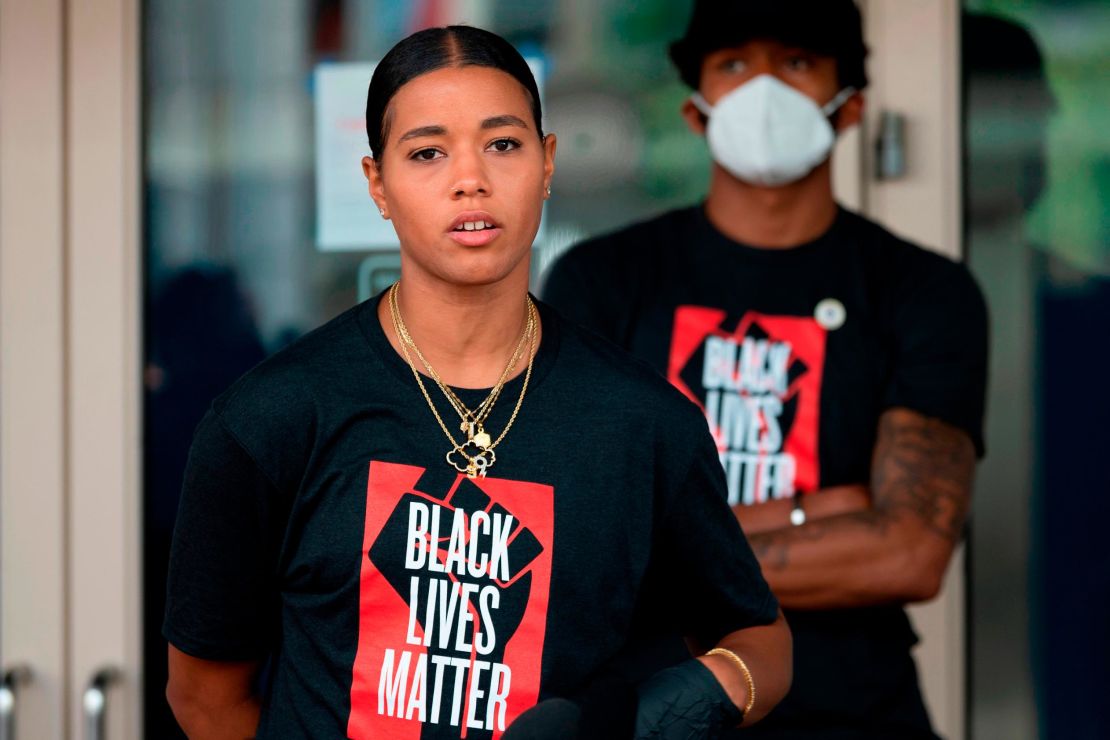
The search results referenced WNBA champion Natasha Cloud suggesting fan outrage over fouls on Clark amounted to “racism,” and another star, A’ja Wilson, commenting on Clark’s “privilege.” These counter-arguments frame the attention Clark receives not as purely organic or meritocratic, but as a symptom of a larger, systemic media bias.
Patrick’s firm assertion—that Clark is the most valuable player **“FOR the league”—**acts as a blunt counter-measure to this debate. He is essentially arguing: Regardless of how the attention is generated, or what social dynamics are at play, the simple, measurable economic output of Clark’s presence outweighs all other considerations.
The WNBA may be uncomfortable with the level of celebrity Clark commands, but it is a discomfort they must endure, because without it, they are back to negotiating for small increments. The league must “embrace it,” or risk sabotaging its own future.
The Future of the Player-League Dynamic
Patrick’s statement is a stark forecast for the future of the WNBA. The league is entering an era where its most valuable assets may quickly outgrow the institutional structure. The ability of a player like Clark to command multi-million dollar deals and TV contracts means her individual market power is higher than the average WNBA team’s valuation just a few years ago.
For Clark, the WNBA offers the competitive stage and the validation of being a professional basketball player. But financially and culturally, she is already operating on a level independent of the league’s collective structure. She doesn’t need its check to survive; she needs its schedule to play.
The true test for the WNBA, as Patrick implies, is whether it can shed its institutional pride and fully lean into the Clark phenomenon without feeling diminished. If players and teams continue to resist the narrative—if they refuse to acknowledge that Clark’s arrival has been a transformative economic bailout—they risk appearing ungrateful and out of touch with the very financial engine driving their collective betterment.
Dan Patrick’s ultimate message is one of urgent acceptance: the league has been handed a historic lifeline, an opportunity to rewrite its economic destiny. It’s an opportunity delivered by a player so valuable that she is currently the indispensable pillar holding up the league’s newly constructed, billion-dollar roof. The WNBA may survive without Clark, but it won’t thrive. And in the cutthroat business of professional sports, thriving is the only currency that matters.
This video discusses why some people refuse to acknowledge the dramatic, positive change Caitlin Clark has brought to the WNBA, which aligns with Dan Patrick’s controversial statement that the league needs her more than she needs the league.